
Male Fertility is Declining: Everyday Habits That Could Be Responsible
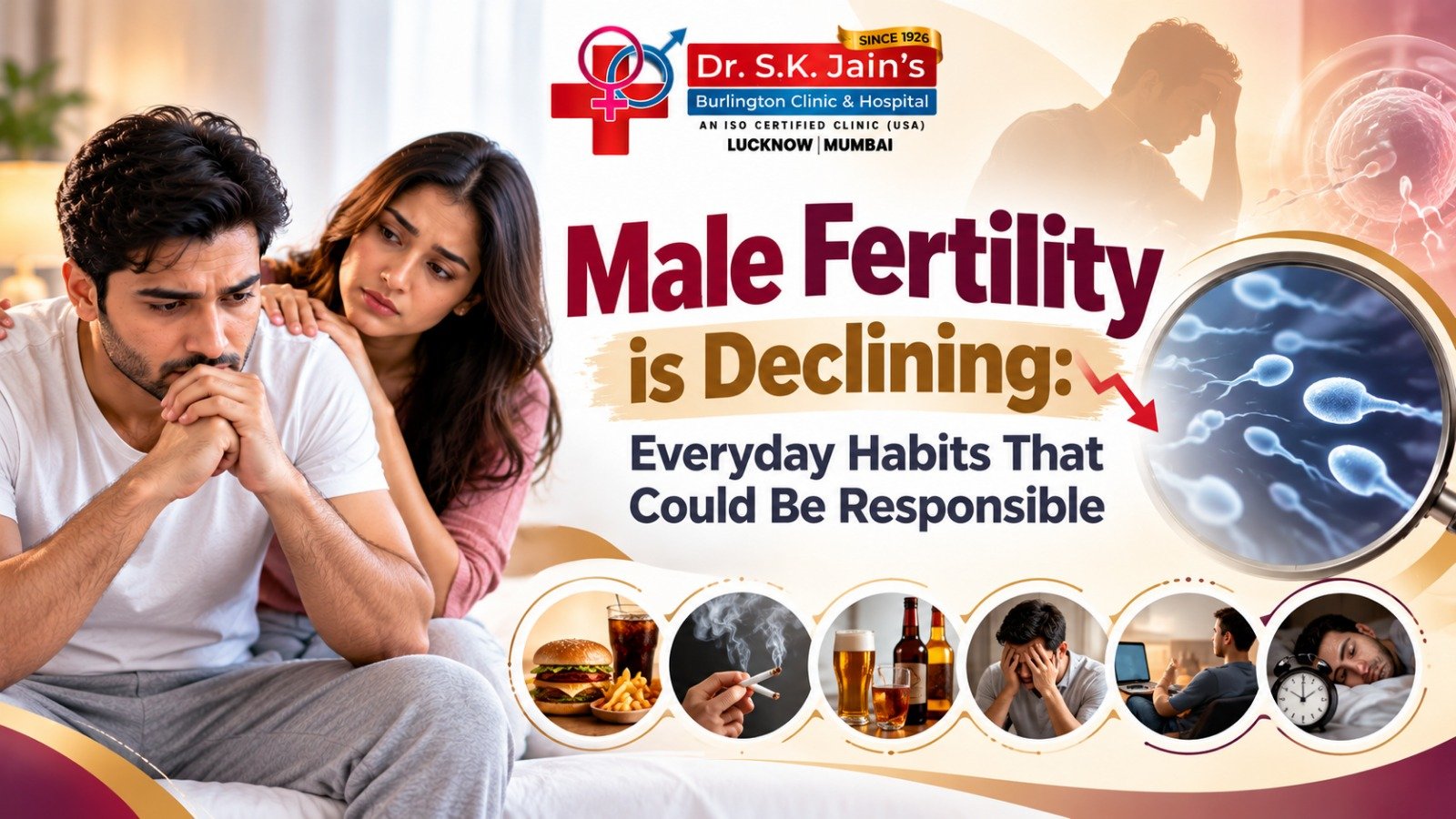
Table of Contents
- 1. The Global Crisis of Declining Male Fertility
- 2. 1. Smoking, Vaping & Tobacco Consumption
- 3. 2. Ultra-Processed Foods and Poor Diet
- 4. 3. Sedentary Lifestyle and Prolonged Screen Time
- 5. 4. Alcohol and Recreational Substance Abuse
- 6. 5. Environmental Toxins & Endocrine Disruptors
- 7. 6. Chronic Stress, Cortisol Spikes & Sleep Deprivation
- 8. Evidence-Based Clinical Solutions & Recovery Protocols
📰 Featured Column in News18 Network: Authored by Prof. (Dr.) Saransh Jain, Senior Andrologist & Sexologist at Dr. SK Jain's Burlington Clinic & Hospital. Read the original syndicated feature on News18: Read Full News18 Article →
The Global Crisis of Declining Male Fertility
Over the past five decades, global reproductive health studies have sounded a loud clinical alarm: average human sperm counts have dropped by over 50% worldwide. Once considered primarily a genetic or anatomical issue, modern clinical evidence confirms that the overwhelming majority of secondary male sub-fertility is directly fueled by modifiable everyday lifestyle habits and environmental toxicity.
As Prof. (Dr.) Saransh Jain notes in his prominent News18 medical column, male fertility serves as an essential barometer for overall cardiovascular and systemic health. When reproductive parameters deteriorate, it is often the body's earliest warning sign of systemic inflammation and metabolic dysfunction.
Everyday Habits That Are Damaging Male Reproductive Health
1. Smoking, Vaping & Tobacco Consumption
Tobacco combustion releases thousands of toxic metabolites, including cadmium, lead, and polycyclic aromatic hydrocarbons. These compounds induce severe reactive oxygen species (ROS) production in the seminal plasma, resulting in elevated Sperm DNA Fragmentation (SDF). Even electronic cigarettes and heated tobacco products contribute to reduced sperm motility and abnormal morphology (teratozoospermia).
2. Unhealthy Fast Food Diets & Trans Fats
Diets high in saturated trans fats, ultra-processed foods, artificial preservatives, and refined sugars lead to insulin resistance and subclinical systemic inflammation. Leydig cells in the testes require essential micronutrients (such as zinc, selenium, coenzyme Q10, and omega-3 fatty acids) to synthesize testosterone and fuel spermatogenesis. Depriving the body of these micronutrients suppresses sperm count and vitality.
3. Sedentary Lifestyle, Screen Time & Testicular Hyperthermia
The human testes are situated anatomically outside the pelvic cavity because spermatogenesis requires an optimal temperature 2°C to 3°C lower than core body temperature. Prolonged desk sitting (over 8–10 hours daily), resting warm laptops on the lap, tight synthetic undergarments, and lack of cardiovascular exercise elevate scrotal temperature, causing thermal damage to maturing spermatozoa.
4. Regular Alcohol Consumption
Excessive alcohol intake directly impairs the liver's ability to metabolize circulating estrogen, shifting the hormonal balance away from testosterone. Alcohol also acts as a testicular toxin, causing atrophy of the seminiferous tubules and decreasing both ejaculate volume and sperm motility.
5. Environmental Toxins & Endocrine Disrupting Chemicals (EDCs)
From phthalates in personal care products to bisphenol-A (BPA) in plastic food containers and microplastics in municipal water, men are continuously exposed to synthetic xenoestrogens. These chemicals mimic natural estrogen in the bloodstream, tricking the pituitary gland into reducing luteinizing hormone (LH) and follicle-stimulating hormone (FSH) release.
6. High Stress Levels & Sleep Deprivation
Chronic psychosocial stress elevates cortisol and adrenaline levels. Prolonged cortisol spikes suppress the Hypothalamic-Pituitary-Gonadal (HPG) axis, which directly dampens free testosterone production and disrupts the circadian rhythm necessary for nocturnal hormonal recovery.
Summary of Actionable Daily Recommendations
- Quit Smoking & Tobacco: Sperm regenerative cycles take ~74 days; quitting tobacco yields noticeable semen improvements within 3 months.
- Adopt an Antioxidant-Rich Diet: Include leafy greens, walnuts, citrus fruits, berries, and lean protein rich in L-carnitine.
- Keep Testicles Cool: Take active breaks every 45 minutes, avoid hot tubs/saunas during conception windows, and wear breathable cotton apparel.
- Prioritize 7-8 Hours of Quality Sleep: Over 70% of daily testosterone is released during deep REM and Slow-Wave sleep stages.
When to Seek Expert Clinical Evaluation
If a couple has been attempting to conceive for 12 months (or 6 months if the female partner is over 35) without success, both partners must be evaluated simultaneously. At Dr. SK Jain's Burlington Clinic & Hospital, our specialized andrology department provides comprehensive diagnostics, including Kruger strict morphology semen analysis, DNA fragmentation indexing, hormonal profiling, and restorative regenerative protocols.
Consult Prof. (Dr.) Saransh Jain
Confidential, scientific, and compassionate male reproductive healthcare across our flagship centers in Lucknow and Mumbai.